- TOP
- Investor Relations
- CTI Engineering Group’s Mid- to Long-Term Vision
 CTI Engineering Group’s Mid- to Long-Term Vision
CTI Engineering Group’s Mid- to Long-Term Vision “SPRONG 2030”
Formulated in August 2021
Revised in February 2025
1. Background to the Establishment of a New Mid- to Long-Term Vision
We have decided to establish a new mid- to long-term vision, in light of changes in the business and corporate management environment and the need to further clarify the direction in which the Group should strive.
(1) The social environment has changed significantly, including the increase in large-scale natural disasters due to climate change, major shifts in work styles triggered by the spread of COVID-19, developments in the Fourth Industrial Revolution, and the achievement of SDG targets.
(2) Since the establishment of our previous vision (CLAVIS), there have been significant changes in the business and corporate management environment (e.g., the establishment of the Construction Management Division and the acquisition of Waterman Group Plc).
2. Overview of SPRONG 2030: CTI Engineering Group’s Mid- to Long-Term Vision
2.1 Vision for CTI Engineering Group
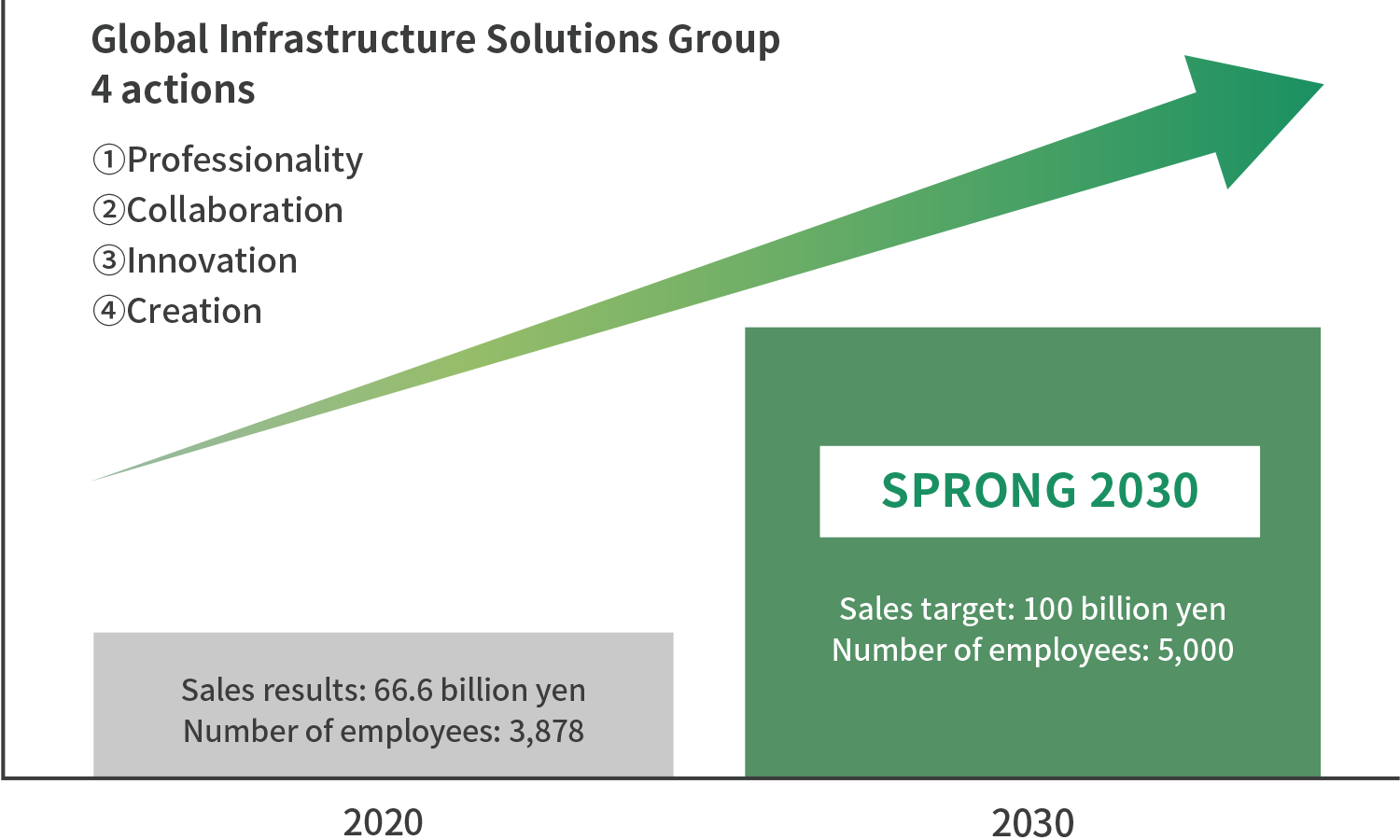
Global Infrastructure Solutions Group
We aim to make great strides as a “Global Infrastructure Solutions Group” that contributes to the sustainable development of society by facilitating solutions to myriad infrastructure-related challenges in Japan and around the world.
2.2 CTI Engineering Group’s Management Targets
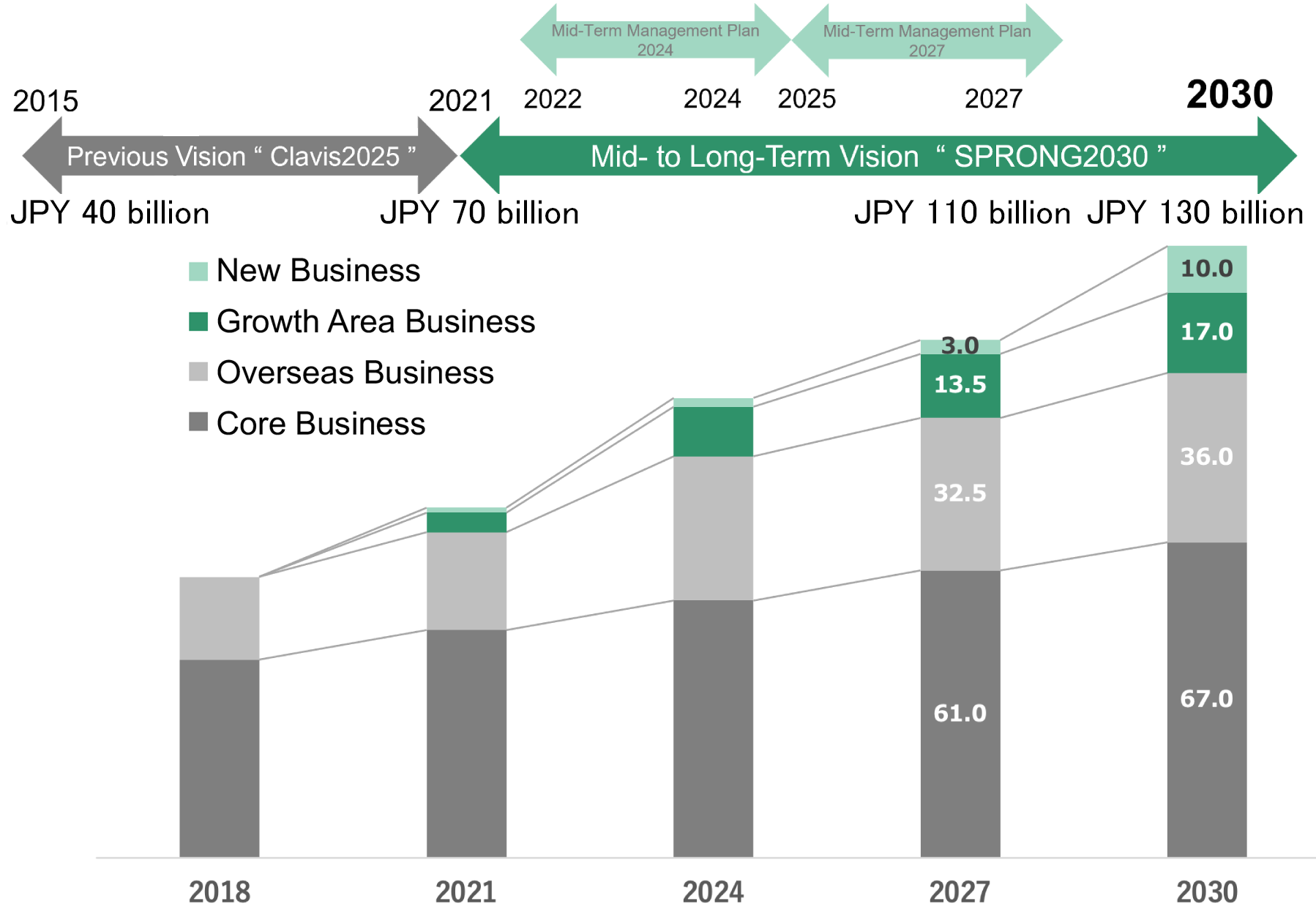
Sales reached JPY 97.6 billion in FY2024, almost achieving the target of mid- to long-term vision target of JPY 100 billion.
Considering recent growth, partially revised CTI Engineering Group’s Med- to Long-Term Vision - SPRONG 2030 - in February 2025.
| Target year | 2030 |
|---|---|
| Sales | JPY 130 billion Domestic sales: No.1 in Japan (JPY 94 billion) Overseas sales: about 30% of whole sales (JPY 36 billion) |
| Operating Income | JPY 15 billion (OI Margin 11% or more)) |
| ROE | 12% or more |
| Number of employees | 5,000 |
2.3 Direction of business expansion
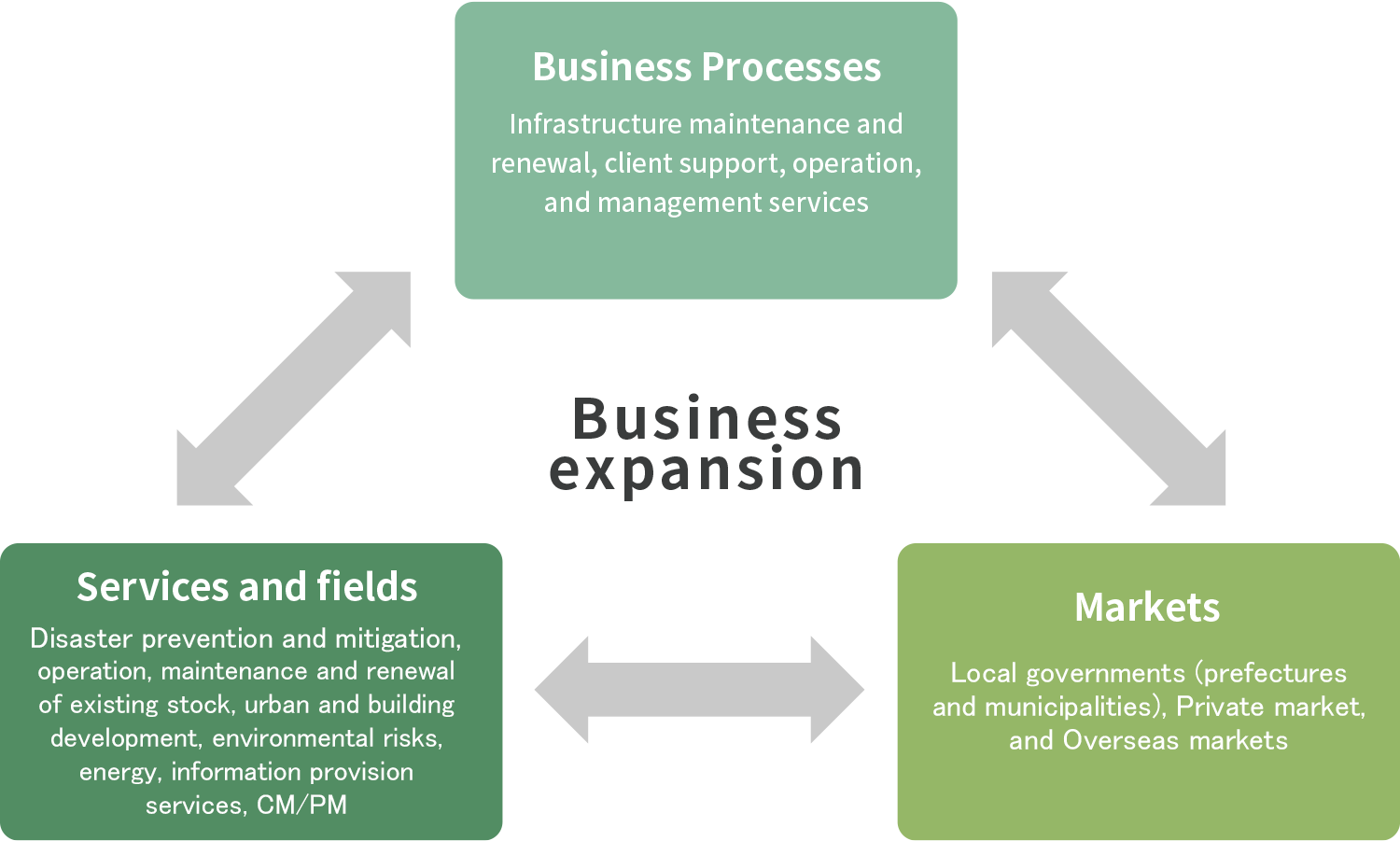
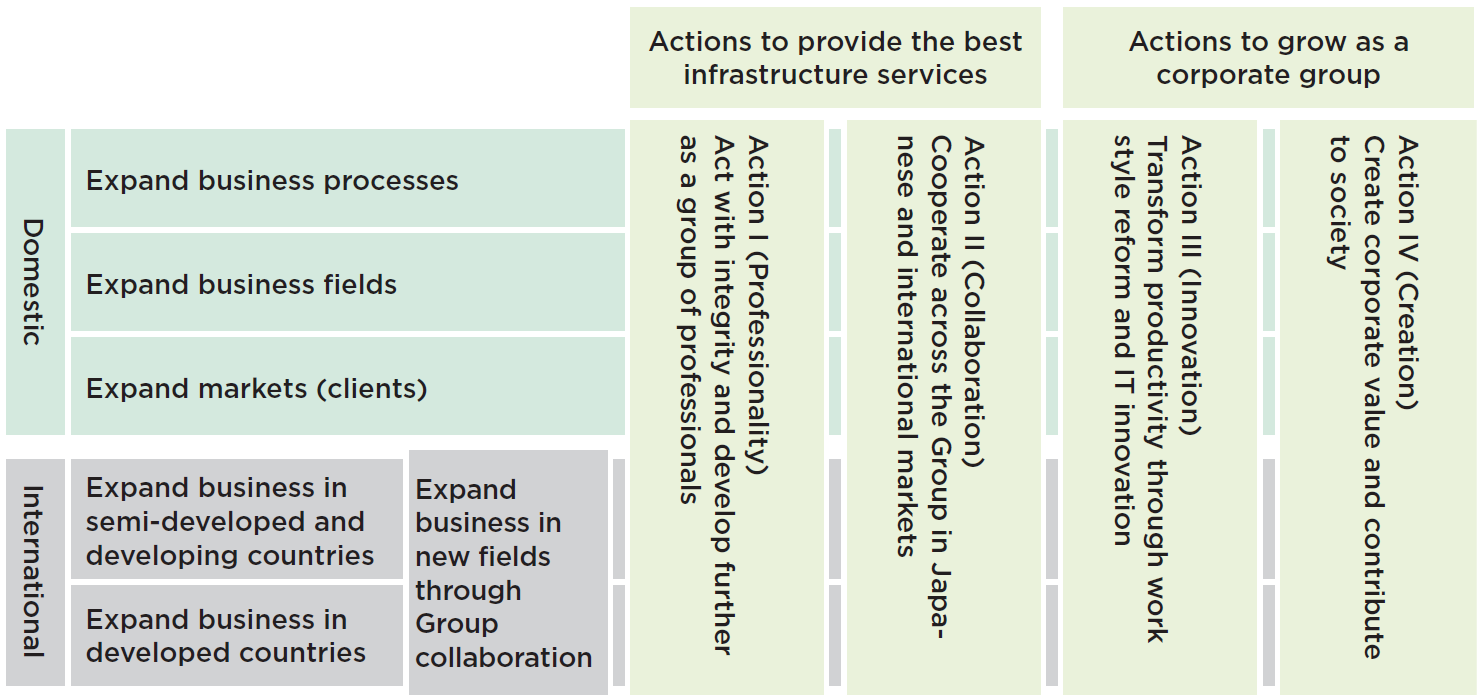
We will expand our business processes, business fields (services), and markets.
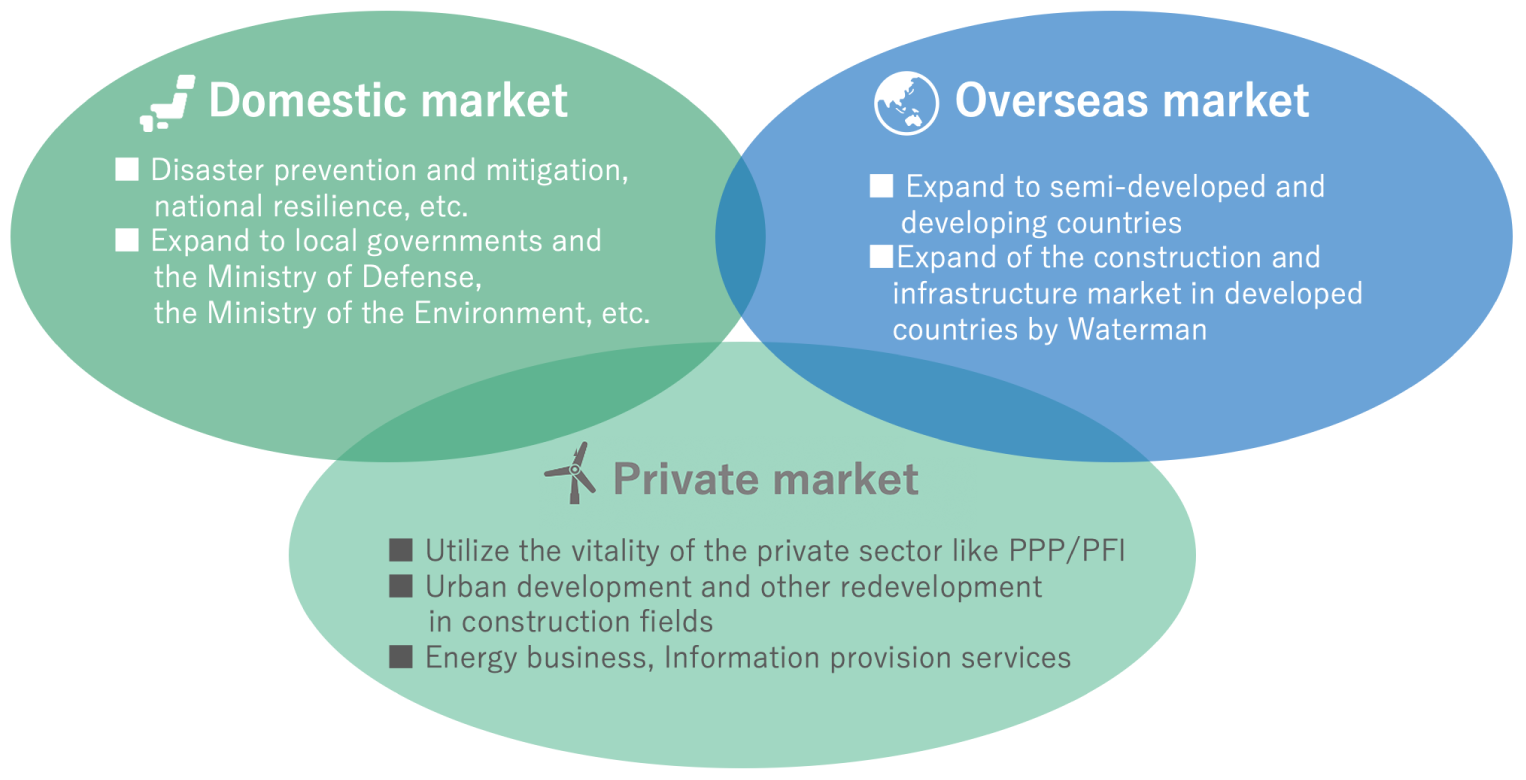
With regard to ‘markets’ in particular, the aim is to expand domestic and overseas markets and private sector projects that utilise existing and new technologies (Figure 3).
2.3.1 Direction of business expansion in Japan
(1) Expansion of business processes
We will develop services for all business processes related to infrastructure.
*“Services” refers to infrastructure services provided in various fields, such as River, Road, Information, and Environment.
(2) Expansion of business fields (services)
We will expand our business in various fields by implementing the results of our research and development and establishing new engineering divisions.
Table 1: Business fields to expand (services)
| Services and fields | Content | Target sales (100 million yen) |
|---|---|---|
| Core business areas | Disaster prevention and mitigation, operation, maintenance and renewal of existing stock, urban and building development, environmental risks and other social infrastructure planning, research, planning and design, etc. | 670 |
| Growth area business | Energy | 30 |
| Information provision services | 65 | |
| CM/PM | 75 | |
| New business | Areas of technology that have not yet been monetised at present but have potential for the future | 100 |
| Overseas business | Same as core business areas | 360 |
(3) Market expansion
We will steadily increase orders received from primary government agencies, such as the Ministry of Land, Infrastructure, Transport and Tourism, and expand our business especially to local governments (prefectures, municipalities) and the private-sector market.
2.3.2 Direction of International business expansion
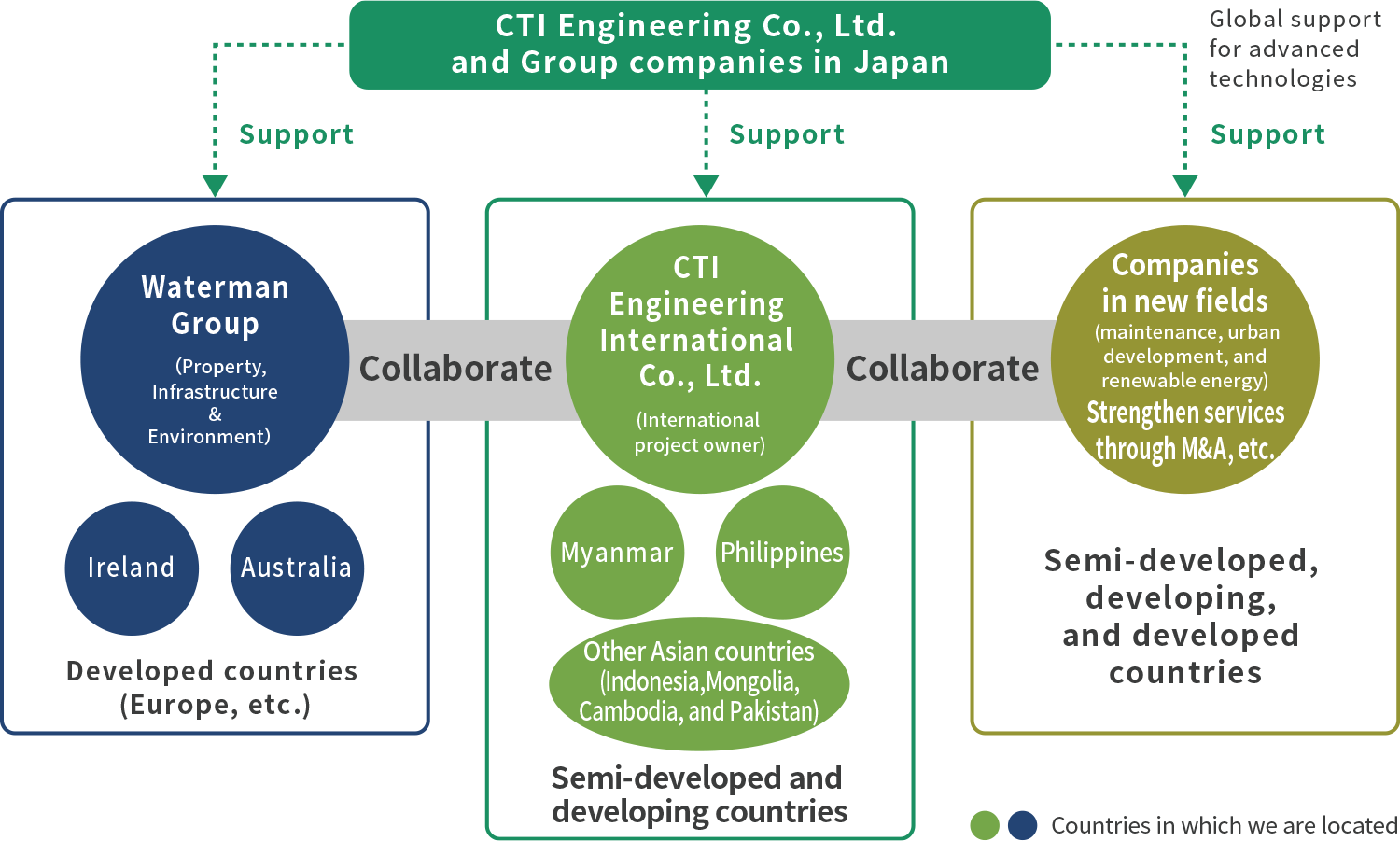
We will promote global expansion in developing and developed countries.
Table 2: Regions and methods for international business expansion
| Policy | Major regions for expansion |
|---|---|
| (1) Expansion in semi-developed and developing countries | Asia (non-ODA) |
| Asia, Africa, Middle East, South America, etc. (ODA) | |
| (2) Expansion in developed countries | United Kingdom, Ireland, and Australia |
| (3) Expansion of collaboration and new fields | (1), (2), and other developed countries |

2.3.3 Image of business sector expansion
Alongside solid growth in the CTI Group's core businesses, such as disaster prevention and mitigation and the operation of existing stock, the Group will drive growth areas such as energy, CM/PM and information provision services, and expand new businesses from 2027 onwards based on the results of its R&D investments (Fig. 7).