- TOP
- Sustainability
- Biodiversity
 EnvironmentBiodiversity
Drawing on the expertise cultivated over many years in natural environment surveys, ecosystem services assessment, and biodiversity conscious infrastructure development, we are advancing technological innovation and enhancing support services that contribute to the conservation and restoration of biodiversity. Going forward, we will continue to work with businesses, local communities, and society at large to realize a “nature positive society,” and to help build a sustainable future through coexistence with nature.
Contribution to the 30by30 Target
The “30by30” initiative is an international goal that aims to conserve and protect 30 percent of the world’s terrestrial and marine areas by 2030 in order to safeguard biodiversity. As climate change and ongoing development continue to drive the decline of many species and the loss of natural environments, this initiative seeks to restore nature and promote a society in which people and nature can coexist harmoniously.
The 30by30 effort emphasizes not only the expansion of protected areas such as national parks, but also the importance of “sustainable management,” whereby local communities and businesses utilize natural resources while conserving them.
Based on the recognition that protecting the natural environment underpins our livelihoods and economic activities, the 30by30 target represents a globally shared and critical initiative. Our company is also participating in the “30by30 Alliance” in support of this effort.
The 30by30 effort emphasizes not only the expansion of protected areas such as national parks, but also the importance of “sustainable management,” whereby local communities and businesses utilize natural resources while conserving them.
Based on the recognition that protecting the natural environment underpins our livelihoods and economic activities, the 30by30 target represents a globally shared and critical initiative. Our company is also participating in the “30by30 Alliance” in support of this effort.
Applying environmental DNA technology in biological surveys
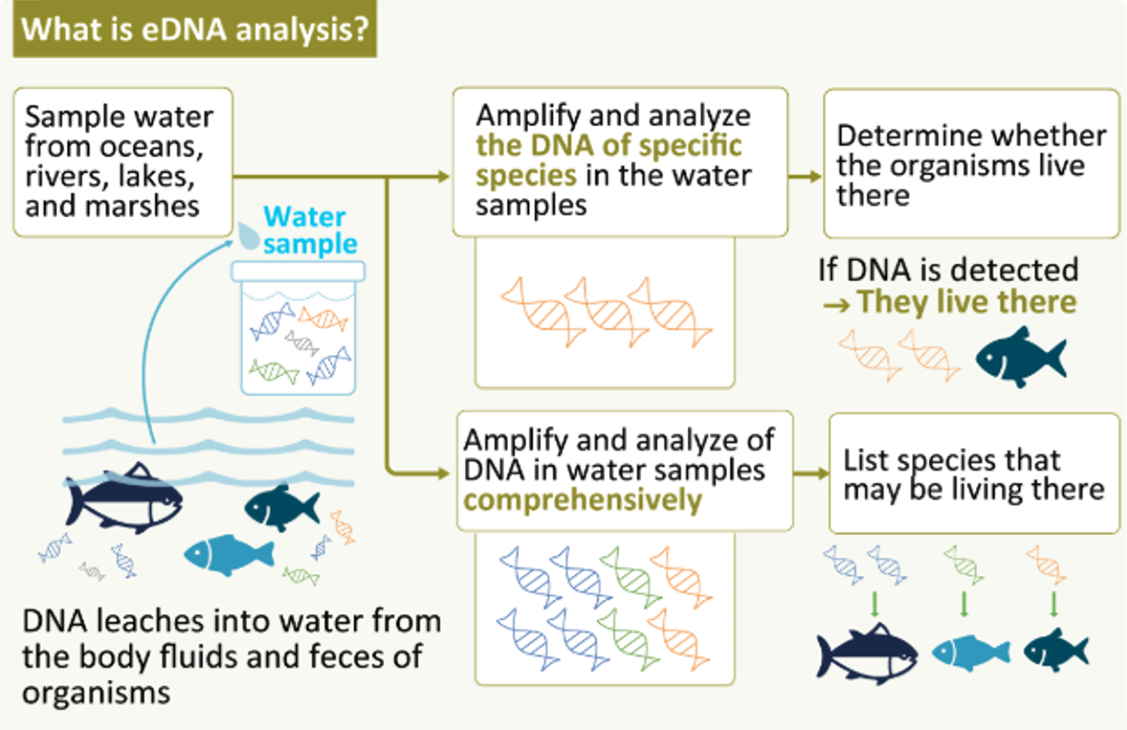
Environmental DNA (eDNA) refers to genetic material derived from organisms that exists in the environment, such as in water, soil, or air. Fish, animals, plants, and microorganisms release DNA into their surrounding environment through skin cells, feces, urine, blood, mucus, and other biological materials. By collecting and analyzing these samples, it is possible to identify what kinds of organisms inhabit a particular area.
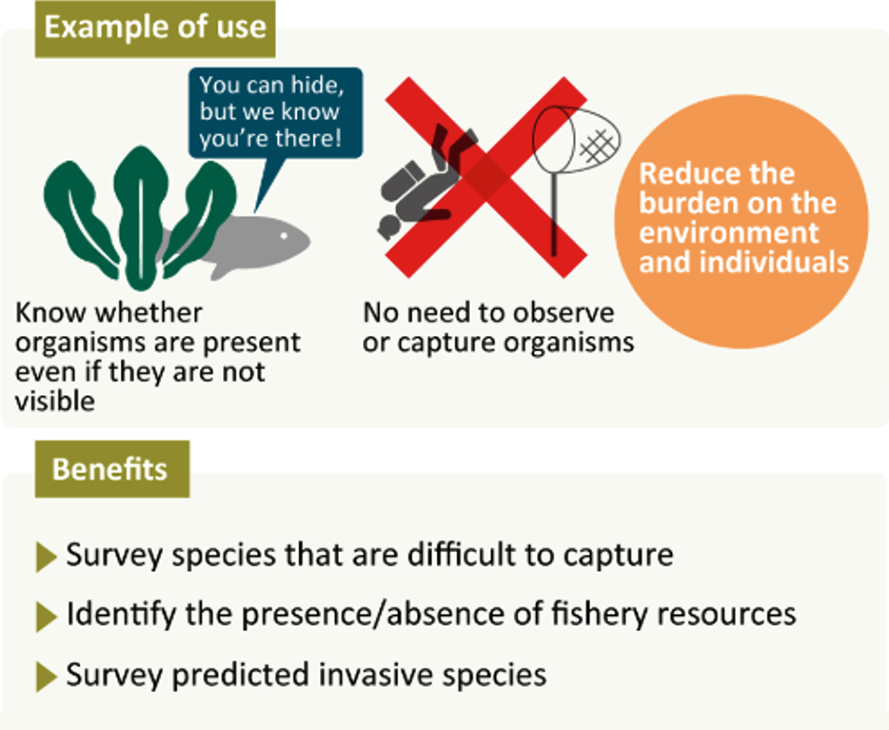
A key feature of eDNA analysis is that surveys can be conducted without directly capturing organisms or visually observing them. For example, simply collecting and analyzing water from a river or lake makes it possible to determine the species of fish or amphibians present. This approach not only reduces the time and labor required for surveys, but also minimizes disturbance to natural environments and living organisms.
Today, eDNA analysis is used in a wide range of fields, including biodiversity assessment, early detection of invasive species, surveys of endangered species, and evaluation of conservation outcomes. As a technology that enables us to understand environmental conditions without damaging nature, it is attracting growing attention as an important method for supporting sustainable environmental management.
A key feature of eDNA analysis is that surveys can be conducted without directly capturing organisms or visually observing them. For example, simply collecting and analyzing water from a river or lake makes it possible to determine the species of fish or amphibians present. This approach not only reduces the time and labor required for surveys, but also minimizes disturbance to natural environments and living organisms.
Today, eDNA analysis is used in a wide range of fields, including biodiversity assessment, early detection of invasive species, surveys of endangered species, and evaluation of conservation outcomes. As a technology that enables us to understand environmental conditions without damaging nature, it is attracting growing attention as an important method for supporting sustainable environmental management.